
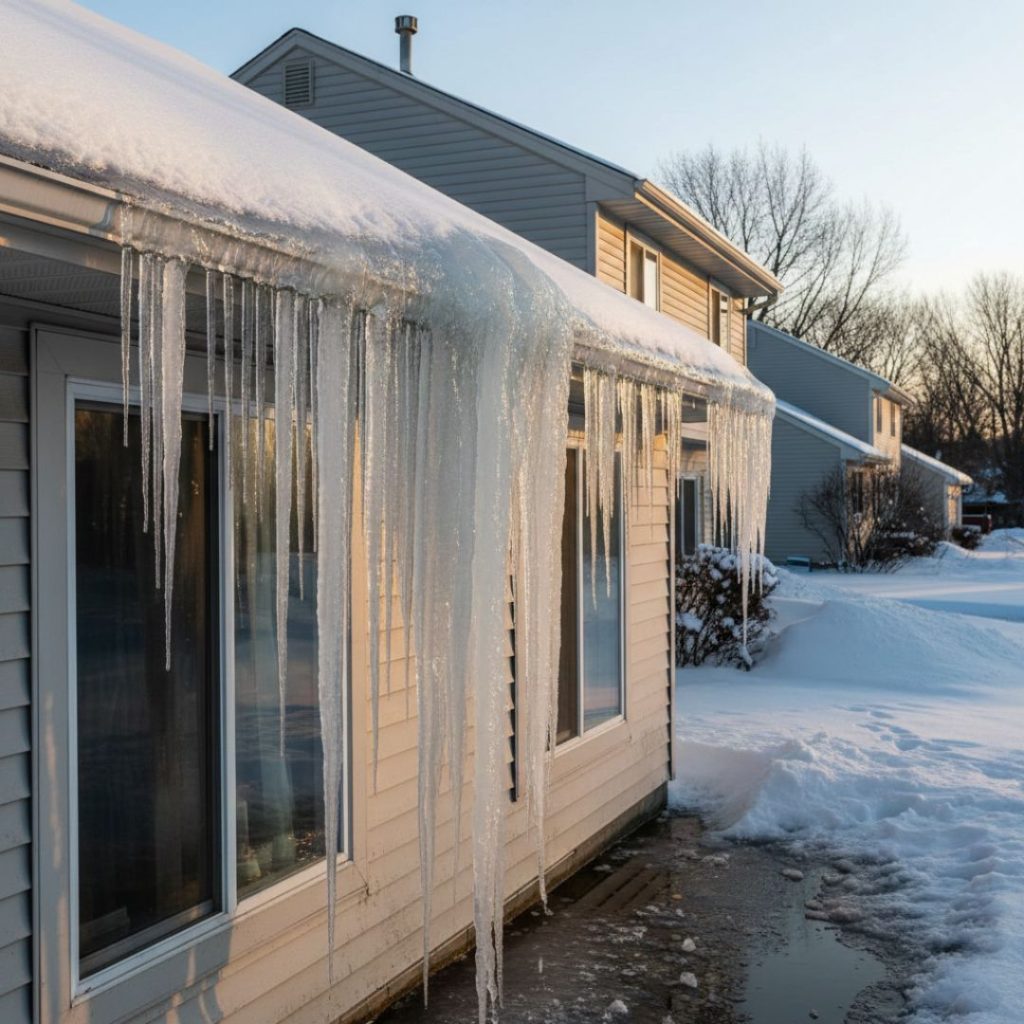
After a heavy winter storm, have you ever looked up at your roof and wondered whether those thick ridges of ice are harmless—or a problem quietly forming above your head?
For homeowners across Pennsylvania and the Northeast, ice dams are one of the most common and misunderstood winter roof issues. They often develop slowly and silently, but the damage they cause can be expensive, disruptive, and stressful. Knowing how to identify ice dams early and respond the right way can help protect your home and reduce the risk of unexpected repairs.
Ice dams form when melting snow refreezes at the edges of a roof, trapping water behind it. That trapped water can seep under shingles and enter the home, leading to interior water damage, mold, and structural issues. Early identification, safe removal, and appropriate homeowners insurance coverage help reduce long-term winter roof damage.
What Are Ice Dams and What Causes Them?
Ice dams on a roof develop when warm air inside the home causes snow to melt unevenly. As the melted snow flows downward, it reaches colder roof edges and refreezes, gradually forming a ridge of ice.
Once this ridge forms, additional melting snow has nowhere to go. Water backs up behind the ice dam and can slip beneath shingles, entering the home through small gaps not designed to handle standing water.
According to Travelers Insurance, this repeated freeze-and-thaw cycle is one of the leading causes of roof damage in cold-weather regions. Contributing factors often include heat escaping from the attic, insufficient insulation, blocked gutters, and repeated snowfall. Even newer or well-maintained homes can experience ice dams under the right conditions.
Early Warning Signs Ice Dams May Be Forming
Ice dams don’t always make themselves obvious from the outside. In many cases, the first warning signs appear indoors—sometimes after damage has already begun.
Ice Dam Warning Signs and What They May Indicate
| What You Notice | What It May Mean |
| Thick ice along roof edges | Water backing up under shingles |
| Large icicles hanging from gutters | Uneven roof temperatures |
| Water stains on ceilings or walls | Interior leaks from trapped water |
| Peeling paint or bubbling drywall | Ongoing moisture intrusion |
| Damp insulation in the attic | Heat loss and hidden water damage |
Recognizing these signs early can help limit repair costs and make the insurance process smoother if a claim becomes necessary.
Why Ice Dams Are a Serious Risk for Homeowners
Ice dam damage goes far beyond appearance. Once water enters a home, it can affect insulation, drywall, flooring, and even electrical systems. Over time, ongoing moisture exposure may lead to mold growth and weakened structural materials.
From an insurance standpoint, timing and documentation matter. Interior water damage caused by ice dams may be covered under homeowners insurance, but coverage depends on the policy and how the damage occurred. Identifying issues early—and communicating with your insurance agent right away—helps protect your coverage and avoid surprises later.
How to Remove Ice Dams Safely and Reduce Future Risk
When homeowners ask how to remove ice dams, safety should always come first. Travelers Insurance advises against aggressive do-it-yourself methods that can damage roofing materials or lead to serious injury.
Practical reminders for handling ice dams safely:
- Remove excess roof snow using a roof rake while standing securely on the ground
- Use calcium chloride ice melt designed specifically for roofs—never rock salt
- Keep gutters clear so melting snow can drain properly
- Improve attic insulation and ventilation to help prevent ice dams from forming
Climbing onto icy roofs or chipping away ice often causes more harm than good and can quickly turn a manageable issue into a costly repair.
An Insurance Expert’s Perspective
“Ice dams are a perfect example of how small winter issues can turn into major claims if they’re ignored,” says Ron Rothenberger, the owner of Rothenberger Insurance Services. “Homeowners should document any signs of water damage as soon as they notice them and contact their insurance agent early. A short conversation upfront can help protect coverage and reduce surprises if a claim becomes necessary.”
Frequently Asked Questions About Ice Dams and Insurance
Does homeowners insurance cover ice dam damage?
In many cases, resulting interior water damage may be covered, but coverage depends on policy language and how the damage occurred.
Should I try to remove ice dams myself?
Ground-level snow removal is usually safe. Climbing onto the roof or chipping ice is not recommended.
How quickly can ice dam damage happen?
Damage can begin within days during repeated freeze-and-thaw cycles.
What documentation helps with an insurance claim?
Photos, dates, repair estimates, and early contact with your insurance agent are all helpful.
A Smart Winter Step Forward
Ice dams are common during Pennsylvania winters, but costly surprises don’t have to be. Understanding what causes ice dams, how to remove them safely, and how homeowners insurance responds puts you in control before problems escalate.
A winter insurance review can help ensure your home and investment are properly protected before the next freeze. The team at Rothenberger Insurance Services is always available to answer coverage questions and help homeowners feel confident through the coldest months of the year.