
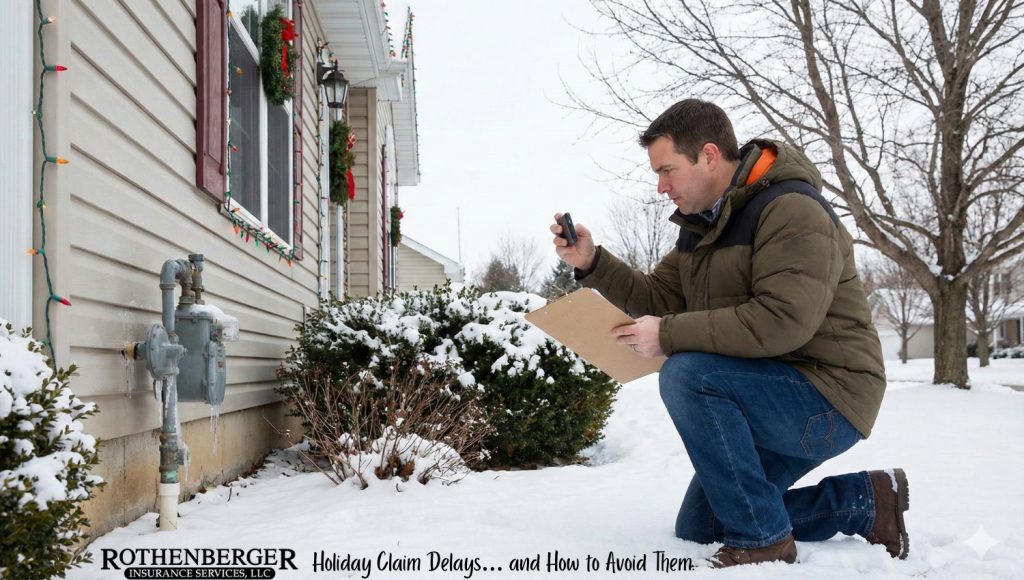
Have you ever wondered what actually happens behind the scenes when you file a claim during the holidays?
Holiday insurance claims follow the same core process as any other claim, but staffing changes, seasonal demand, and vendor availability often affect response times. While delays are common, emergency insurance adjusters and an independent insurance agent help keep claims moving, prevent costly mistakes, and protect policyholders from unnecessary holiday stress.
Important! The moment you click “submit,” call your agent, or open a claim through your carrier’s app, a quiet chain reaction begins—even if it’s Christmas Eve. The Holiday season is one of the busiest and most complex seasons inside the insurance world. Here’s what truly happens after a claim during the holiday is filed—and why having an independent agent matters more than most people realize.
What Happens the Moment You File a Claim During the Holiday
Once a claim is reported, it is immediately timestamped inside the carrier’s system. An internal triage process determines whether the loss appears routine or urgent. From there, the claim is assigned to the next available adjuster or a holiday adjuster team. At the same time, your independent insurance agent receives notice and begins monitoring the file for red flags.
During November and December, insurers typically see a surge in frozen pipes, storm damage, slip-and-fall injuries, kitchen fires, and theft claims. The increased volume alone changes how quickly files move, even when everything is handled correctly.
Average Response Times During the Holidays
During most of the year, first contact from the carrier usually occurs within 12 to 24 hours. During peak holiday weeks, that window often stretches to 24 to 72 hours based on staffing availability and claim volume. The claim is still moving internally—you may simply feel the gap created by shortened office hours, employee vacations, and higher demand across the industry.
When Emergency Adjusters Step In
Insurance carriers plan for the holidays the same way hospitals prepare for flu season. Emergency insurance adjusters are scheduled on extended shifts or placed on call to handle high-risk losses. These adjusters step in when safety, displacement, or immediate structural risk is involved, when widespread weather events occur, or when delayed mitigation would worsen the damage.
Their role is rapid assessment so restoration work can begin quickly. This is one of the strongest tools carriers use to prevent December claims from becoming January disasters.
What Slows the Claims Process Down
Holiday claim slowdowns are rarely caused by carrier neglect. They are driven by real-world constraints that affect every stage of the process. Limited contractor staffing, weather emergencies that trigger regional claim surges, slowed shipping schedules for materials, late reporting by policyholders who hoped to “wait until after the holidays,” and incomplete documentation all create friction that isn’t visible from the outside.
Even well-run systems feel the pressure of seasonal bottlenecks.
What Speeds the Process Up
The fastest-moving holiday claims consistently share five traits:
- The loss is reported immediately
- Clear photos and videos are submitted right away
- Temporary mitigation steps prevent further damage
- The policyholder remains reachable for follow-up
- An independent insurance agent actively monitors and advocates
These five actions shorten claim timelines more consistently than any other factor—especially during peak holiday volume.
Normal Claims vs. Holiday Claims: What Changes?
| Claims Category | Normal Season | Holiday Season |
| Response Time | 12–24 hours | 24–72 hours |
| Adjuster Availability | Full staff | Limited staff plus emergency adjusters |
| Repair Scheduling | Standard contractor timelines | Contractor and weather delays |
| Vendor/Material Availability | Normal turnover | Slower shipping, limited inventory |
| Overall Claim Duration | Predictable timeline | Variable based on season and severity |
This is precisely why having a professional guide through the process becomes so valuable when timing is critical.
How an Independent Agent Protects You During the Holidays
This is where Rothenberger Insurance Services steps into its highest calling.
Behind the scenes, an independent insurance agent does far more than submit paperwork. They actively monitor your file, communicate with the carrier when timelines slip, push for emergency adjuster involvement when needed, review estimates for accuracy, and protect you from mistakes that commonly lead to denials or underpayment.
During December, these quiet efforts save clients significant stress while preventing small issues from turning into expensive January problems. You are not just a claim number—you have an advocate.
Expert Insight from the Owner of Rothenberger Insurance
“The holidays are when people need support and information the most. A good independent agent doesn’t just help you file a claim—they help you navigate it, protect your time, and make sure the carrier sees the full picture of what you’re dealing with.”
— Ron Rothenberger, Owner
Why Delays Happen… and How to Prevent Them
Delays occur because holiday weeks reduce response capacity across the entire claims ecosystem—adjusters, contractors, restoration companies, shipping providers, and even policyholders who may be traveling. Delays are prevented when claims are filed at the first sign of damage, emergency mitigation begins early, documentation is clean and complete, communication stays steady, and an independent agent remains actively involved from day one.
Carriers want clean files. Independent agents help make that possible.
FAQ: Holiday Claim Questions Most People Ask
Are holiday insurance claims handled differently than normal claims?
The internal process is the same, but response times and vendor availability may shift based on staffing and seasonal demand.
What should I do first when filing a claim during the holidays?
Report the loss immediately, document the damage, and contact your independent insurance agent so monitoring begins immediately.
Will an emergency insurance adjuster handle my claim?
Emergency adjusters are assigned when safety, displacement, or rapid mitigation is required.
How long does it take for repairs to begin in December?
It varies based on contractor availability, weather, and material delays. Some repairs begin within days, while others may take longer.
Does filing early really make a difference?
Yes. Early filing is the single most powerful way to reduce delays and prevent holiday backlogs.
Should I call my agent before calling the carrier?
Yes. Your agent helps position the claim correctly, prevents filing errors, and begins advocacy immediately.
Holiday claims don’t have to feel overwhelming.
Rothenberger Insurance Services is here to help you understand the claims process, protect what matters most, and make sure you never face a claim alone—especially during the busiest time of the year.
A 10-minute coverage review today can prevent weeks of stress tomorrow. If you have questions about your coverage or want to prepare before the unexpected happens, our team is ready to help. Give us a call.